Tetracycline discoloration
Whitening alone was unlikely to produce the color change Noe wanted, and it could not change tooth shape or rebuild worn surfaces.

Real Southern Smiles patient · Phoenix, AZ
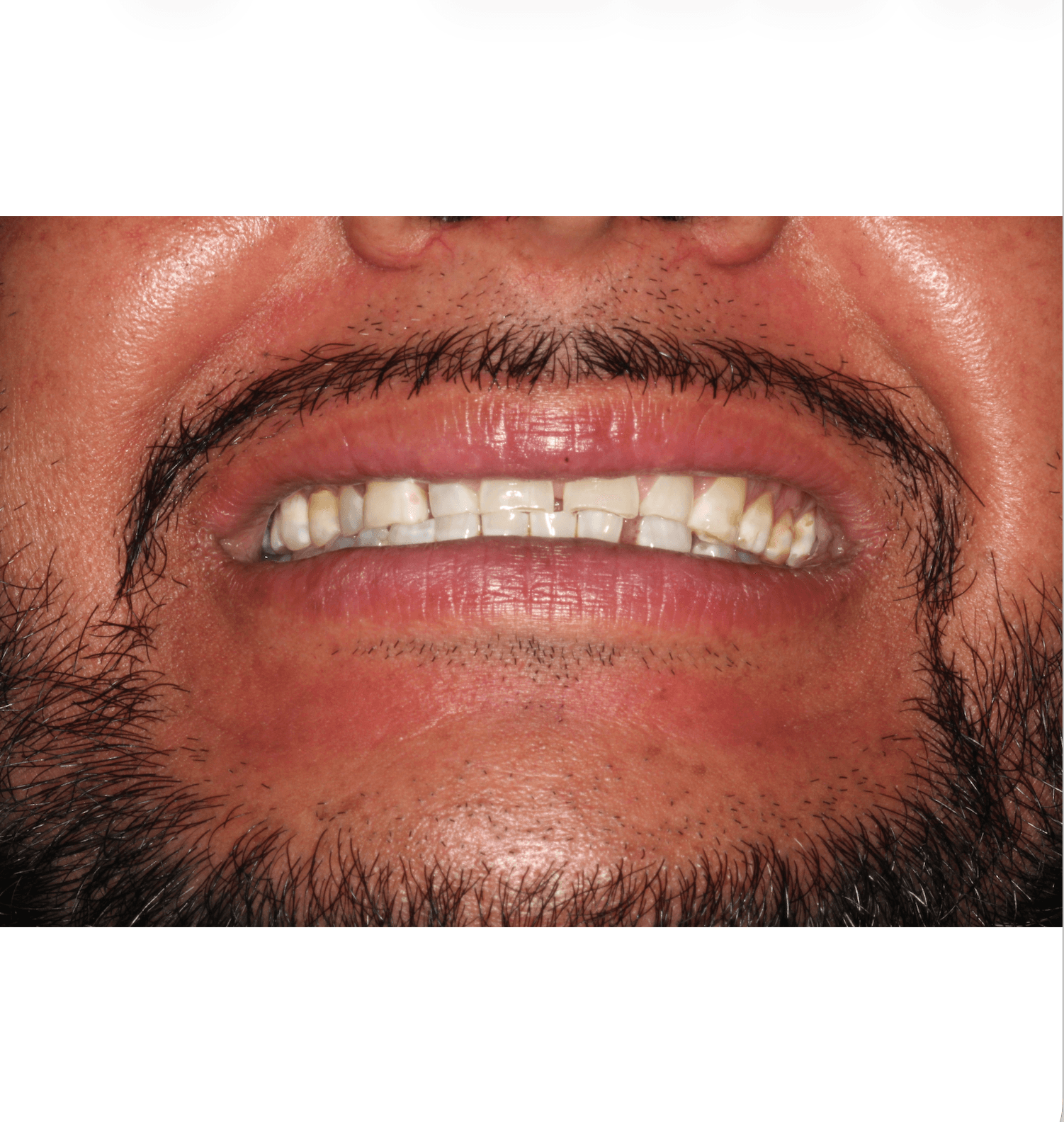
Noe wanted more than whiter teeth. His front teeth were small and spaced, tetracycline staining made the color difficult to change predictably, and years of grinding had worn the rest of his visible smile into a reversed smile line.
His plan combined conservative veneers where added shape was useful with crowns where worn teeth needed fuller coverage.
 Pre-treatment close-up
A closer look at the starting condition
This pre-treatment intraoral image shows the spaces between Noe's front teeth, uneven tooth proportions, tetracycline discoloration, and worn edges that informed the restorative and cosmetic plan.
Clinical image. Individual conditions and treatment needs vary.
The completed plan
4
Minimal-prep front veneers
6
Esthetic zirconia crowns
4
Treatment appointments
1
Protective night-guard follow-up
Why one treatment was not enough
Whitening alone was unlikely to produce the color change Noe wanted, and it could not change tooth shape or rebuild worn surfaces.
The spaces were related to tooth proportions, not simply tooth position. Adding carefully planned width with minimal preparation helped close the gaps without making the teeth look bulky.
Wear from grinding made this more than a color-and-spacing case. The plan also needed to restore tooth length, support the bite, and return the visible smile line to a more natural curve.
Options considered
Could not predictably overcome the tetracycline staining or correct size, spacing, wear, and smile-line concerns.
Could move teeth, but the visible spaces came largely from undersized teeth. Alignment alone would not rebuild the worn surfaces or change their color and proportions.
Would have been less predictable across a ten-tooth plan exposed to significant grinding forces, especially when the bite also needed attention.
See the plan before preparing teeth
After photographs and a digital scan, Dr. Shakally designed the proposed tooth shapes in software. Southern Smiles printed a physical model in the office and used it as a guide to place temporary mock-up material over Noe's unprepared teeth. Nothing was drilled for this appointment. Noe could see the proportions and smile line in his own mouth before accepting treatment and completing the financial arrangements.
Noe's appointment sequence
01
Clinical evaluation, photographs, digital scans, goals, and treatment options.
02
An in-house 3D-printed model guided a removable mock-up over unprepared teeth so Noe could evaluate the proposed design.
03
Noe used nitrous oxide for anxiety support. The teeth were prepared as planned, and in-office temporary restorations protected them while the final ceramics were completed.
04
Fit, color, contours, contacts, and bite were checked before the four veneers and six crowns were delivered.
05
A custom night guard was provided to help protect the ceramic restorations from Noe's grinding habit.
Materials matched to the job
The front four restorations used a zirconia cutback design layered with porcelain. Because these teeth were undersized and needed added width, minimal preparation could create the planned proportions while preserving tooth structure.
The remaining six teeth in the visible plan were substantially affected by wear. Full-coverage esthetic zirconia crowns provided the coverage needed for the restorative and bite objectives.
The outcome
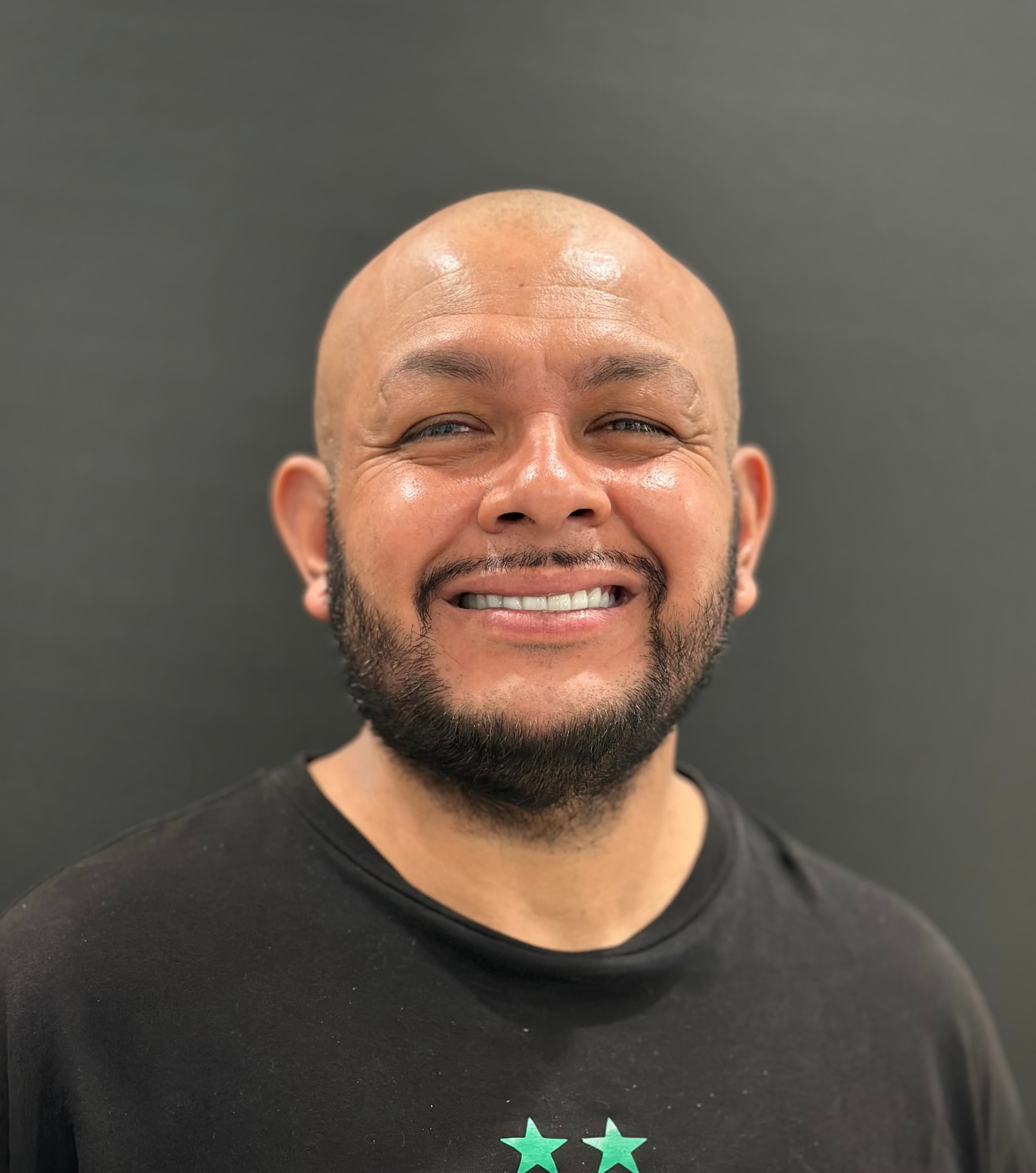
The final result closed the visible spaces, changed the resistant discoloration, restored worn tooth length, and changed the reversed smile line into a natural curve. Individual treatment needs and results vary; this page documents Noe's plan rather than promising the same treatment for another patient.
Start with photographs, a scan, and an honest comparison of the options. Your plan may be simpler or completely different from Noe's.