
Night Guards
Night Guards for Teeth Grinding: How They Protect Your Smile
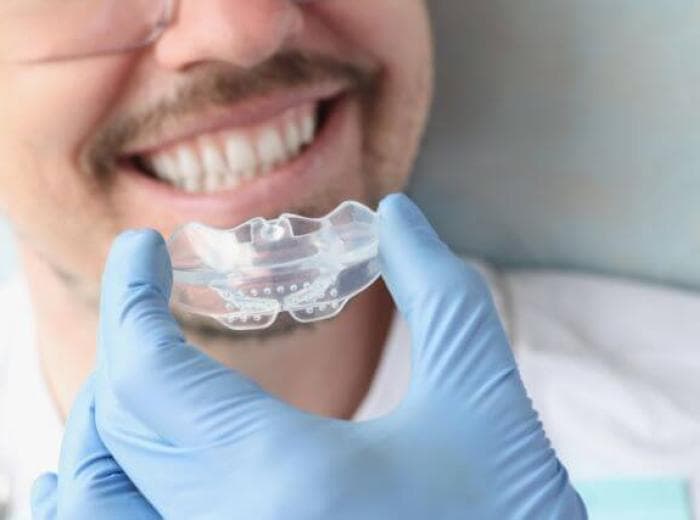
Many people grind their teeth at night without knowing it, until the morning headaches and worn enamel show up. A custom night guard puts a protective barrier between your teeth, eases jaw strain, and helps prevent the kind of damage that grinding causes over time. Here is how they work and how to care for one.
Common signs of nighttime teeth grinding
How do you know if you grind your teeth while you sleep?
Watch for these signs of sleep bruxism:
- Morning headaches, especially around the temples
- Jaw soreness or facial pain when you wake up
- Worn, flattened, or chipped teeth
- Increased tooth sensitivity
- Sleep disturbances (grinding noises can wake you or your partner)
- Sores or cuts inside your cheeks
Catching grinding early helps prevent serious damage, so schedule a dental appointment if these symptoms sound familiar.
How night guards protect your teeth
Night guards form a protective barrier between your upper and lower teeth. Made from durable plastic or acrylic, they absorb grinding forces and prevent direct tooth-to-tooth contact.
We recommend custom-fitted night guards over store-bought ones because they offer better protection, comfort, and longevity. A custom guard matches your exact dental anatomy, distributes pressure evenly, and stays securely in place through the night.
Types of night guards available
Night guards come in several varieties.
- Soft night guards are comfortable and work best for mild grinders, but they typically last 1 to 3 years with proper care.
- Dual-laminate night guards last 3 to 5 years and pair a soft inner layer with a hard outer layer, giving moderate grinders a good balance of comfort and durability.
- Hard acrylic night guards last 5 years or more and offer strong protection for severe grinders. They are less comfortable than the other types and often need a longer adjustment period.
Your dentist will recommend the type that fits your grinding pattern and severity.
The custom night guard process
Getting a custom night guard takes a few steps. First, your dentist evaluates your teeth, jaw, and grinding pattern, and asks about your symptoms and how grinding affects your life. Next, they take digital scans or physical impressions to capture the exact shape of your teeth.
Those impressions go to a dental lab, where technicians create your guard. Once it arrives, you return for a fitting appointment to confirm comfort and fit. Follow-up visits let your dentist check how well the guard is working and make any needed adjustments.
Benefits of wearing a night guard
Consistent use offers several advantages. Most obviously, a guard protects your enamel from wearing down and lowers the risk of chips, cracks, and fractures. It also shields existing dental work, like crowns and fillings, from grinding damage.
By absorbing grinding forces, a night guard eases jaw pain, morning headaches, and facial muscle fatigue. Many patients, and their partners, report better sleep without grinding noises and interruptions.
Just as important, a guard helps maintain proper jaw alignment and reduces stress on the temporomandibular joints (TMJ), which helps prevent temporomandibular disorders (TMD). And from a financial standpoint, a night guard costs far less than treating the extensive damage that untreated grinding can cause.
Proper night guard care and maintenance
Good maintenance extends the life of your guard and keeps it hygienic. Rinse it with warm (not hot) water before and after each use, and brush it gently with a soft toothbrush daily. Skip the toothpaste, since its abrasiveness can cause premature wear. Let it dry completely, then store it in its case.
Deep clean it at least once a month, and weekly if you can. Soak the guard in white vinegar for 30 minutes, rinse with warm water, then soak it in hydrogen peroxide for another 30 minutes. Rinse and let it dry completely. You can also soak it in a non-abrasive denture cleaner. Whichever method you choose, never soak the guard for more than an hour.
Keep your guard away from hot water and direct sunlight, both of which can cause warping. Bring it to your dental appointments for professional cleaning, and replace it when signs of wear appear. Store it in its case in a cool, dry place when it is not in use. Pets seem to love night guards as chew toys, so keep yours out of reach if you have furry family members.
Lifestyle changes that help reduce grinding
A few daily habits can reduce how much you grind. Practice jaw relaxation exercises during the day to train your muscles to stay relaxed at night. Limit caffeine, especially in the afternoon and evening, since stimulants can increase muscle activity during sleep. Cut back on alcohol too, as it disrupts sleep patterns and can worsen grinding.
Build a consistent sleep routine with enough time to wind down before bed. Finally, stay mindful of daytime clenching. Many people unconsciously clench their teeth during focused work or stressful moments.
When to replace your night guard
Even with excellent care, night guards eventually need replacing.
You may need a new guard if you notice:
- Visible cracks or holes
- Wear spots or thinning
- Warping or changes in shape
- Persistent odor despite cleaning
- New or worsening discomfort
Changes in your bite or new dental work may also call for an updated guard design.
The long-term outlook for teeth grinders
With proper treatment and consistent night guard use, most people with bruxism can prevent serious dental damage and manage their symptoms well. Regular check-ups let your dentist monitor your grinding pattern and adjust treatment as needed.
Many patients find that their grinding eases over time with stress management and better sleep habits, though others may need a night guard indefinitely. The encouraging part is that with proper protection, even lifelong grinders can keep their smiles healthy.
Working through the grind
Teeth grinding affects more than your smile. It touches your overall health and quality of life. A proper diagnosis, followed by a custom-fitted night guard, protects you from the harmful effects of bruxism.
If you suspect you grind your teeth, do not wait for damage to appear. Schedule a dental appointment to discuss your symptoms and explore the night guard options that suit your needs.
Ready for a healthier smile?
We provide a thorough exam as part of every wellness visit. Book an appointment and let us take care of you.