In-office whitening
A higher-concentration whitening gel is applied while the gums are protected. This option is designed for a faster change under direct supervision, though more than one visit or later maintenance may still be appropriate.

Cosmetic · Teeth whitening
Professional teeth whitening can lighten the color of natural teeth, but the right method depends on the cause of the discoloration, existing dental work, and your history of sensitivity. Dr. Monzer Shakally examines those factors before recommending an in-office or take-home plan at Southern Smiles in South Phoenix.
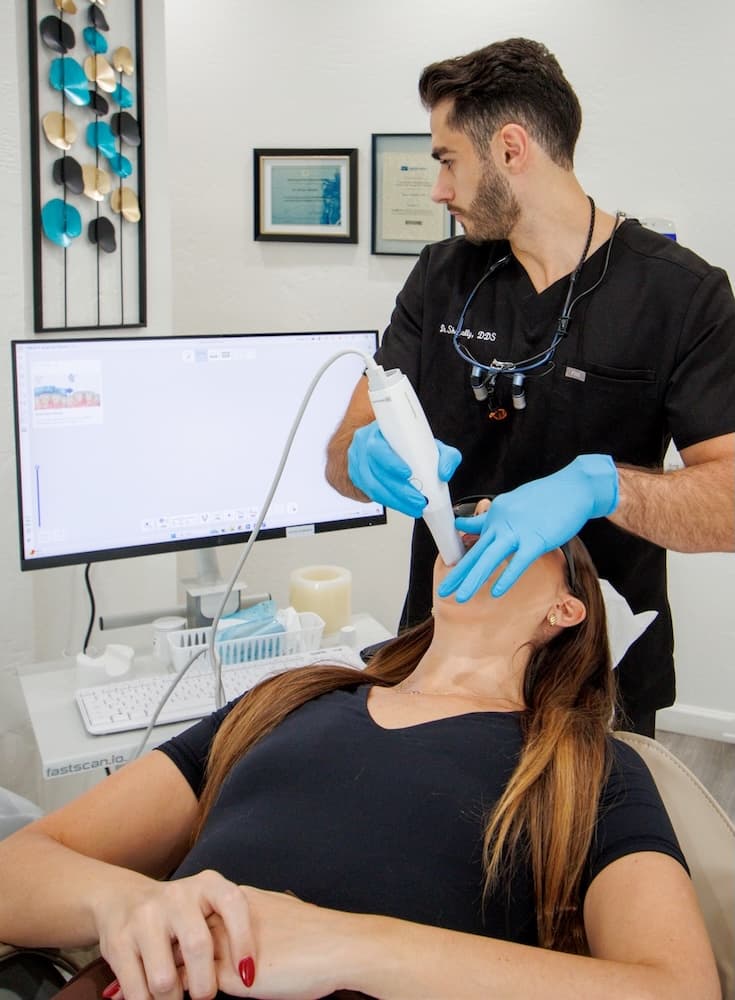
An exam before whitening begins
In-office and supervised take-home options
Bilingual care for South and East Phoenix
Candidacy and limits
We identify what is causing the color change and check the teeth and gums first. That prevents a cosmetic treatment from hiding a problem that needs dental care.
Compare whitening options
The best option depends on your starting shade, schedule, sensitivity, and how much control you want over the process.
A higher-concentration whitening gel is applied while the gums are protected. This option is designed for a faster change under direct supervision, though more than one visit or later maintenance may still be appropriate.
Custom trays hold the prescribed gel against the teeth at home. The change is more gradual, and the schedule can often be adjusted if sensitivity develops.
Whitening strips and some other peroxide products can lighten natural teeth when used as directed. Whitening toothpastes mainly remove surface stains; they do not bleach teeth the same way peroxide does.
The whitening process
A safe plan begins with an exam, not a promised shade. The steps vary between in-office and take-home treatment.
Step 1
We review sensitivity, check for decay or gum problems, and identify restorations or a single dark tooth that may need a different approach.
Step 2
We document the current color and discuss a realistic range rather than guaranteeing an exact final shade.
Step 3
We protect the gums for in-office care or provide fitted trays and specific instructions for supervised home treatment.
Step 4
We evaluate the response, manage sensitivity, and plan maintenance around your habits and any future cosmetic restorations.
Sensitivity and safety
Peroxide whitening can temporarily irritate sensitive teeth or the gums. Tell us about existing sensitivity before treatment so we can choose the concentration, schedule, and protective steps appropriately.
Cost and planning
The fee depends on the method and the care needed before treatment. Whitening is usually elective, so we provide a written estimate after confirming which option fits your mouth and goals.
Common questions
Straight answers about professional whitening, sensitivity, restorations, timing, and realistic results.
Professional whitening uses peroxide-based gel to change colored compounds within natural enamel and dentin. In-office treatment uses a protected, supervised application; take-home treatment uses prescribed gel in fitted trays over a longer schedule.
No. Whitening changes natural teeth but does not lighten tooth-colored restorations. If a visible restoration already matches your current shade, whitening could create a mismatch that needs to be discussed before treatment.
Temporary tooth sensitivity and gum irritation are the most common side effects. The risk and intensity vary with the product, concentration, contact time, and the individual tooth. The schedule can often be adjusted if sensitivity develops.
The response depends on the starting shade and the type of discoloration. Yellow or age-related darkening may respond differently from white spots, gray discoloration, medication-related staining, or a single dark tooth. We discuss a realistic range rather than promise a specific shade.
Often, yes. Existing and new restorative materials do not whiten, so whitening natural teeth first can help establish the shade used for later bonding, veneers, or crowns. The timing should be coordinated so the final color is stable before shade matching.
Results are not permanent. Coffee, tea, wine, tobacco, aging, oral hygiene, and the original cause of discoloration all affect how the color changes over time. Some patients choose periodic maintenance after review.
Cosmetic whitening is usually not covered by dental insurance. We provide a written estimate and can review payment options before treatment begins.
Plan the final shade first
These pages explain how whitening fits with changes to tooth shape, proportion, alignment, and a complete smile plan.
See how composite can repair small chips or shape concerns after the natural teeth reach the planned shade.
Learn more →Learn when whitening alone cannot address shape, enamel, or deeper color concerns across visible teeth.
Learn more →Understand how whitening can be sequenced with bonding, veneers, alignment, and restorative care.
Learn more →Comparing more than one way to improve your smile? Explore all cosmetic dentistry options →
Start with an exam and an honest look at the discoloration, restorations, sensitivity, timing, and budget. We will explain what whitening can change—and what it cannot.